
Foam
Finasteride / Minoxidil 0.25 mg / 12 mg Foam
A once-daily topical foam with finasteride and a higher 12% minoxidil for more advanced thinning or when 5% has plateaued. Prescribed by a licensed physician.
Starting at $89/mo
Hair lossTopical
RxPrescription onlyApplied to the scalp · Once a day · Hair loss · Topical
Starting at $89/mo
Finasteride and 5 mg minoxidil in one topical foam: the two best-studied hair-loss medications, applied to the scalp instead of taken as a pill.
Choose your plan
Real prices from our pharmacy. Longer plans cost less per month and are billed up front. Pause or cancel anytime.
Every plan includes
(the starting-strength combination)
Finasteride blocks 5-alpha-reductase, the enzyme that turns testosterone into DHT, the hormone that miniaturizes hair follicles in male and female pattern hair loss. Minoxidil widens scalp blood vessels and lengthens the follicle's growth phase. Combining them in a foam puts both where they act, with far less finasteride reaching the rest of the body than the oral tablet. This is the 5 mg minoxidil strength, the usual starting point.
90%
of men on oral finasteride had visible hair growth or no further loss at 5 years, versus 25% on placebo
That figure is from the 5-year oral finasteride study. Topical finasteride has smaller but consistent trials; compounded foams are prescribed off-label at your physician's discretion.

Day 1
A US-licensed physician reviews your pattern of loss, history and photos and chooses the foam and strength. It ships discreetly to your door.
Weeks 1–4
Apply the foam to a dry scalp once a day, on the areas that are thinning. It takes a minute and dries quickly. Some early shedding is normal: old hairs are being replaced.

Months 2–3
Shedding slows and the scalp settles. New hairs start as fine, short growth that is easy to miss without photos, which is why we ask for them.

Months 4–6
Visible change for most responders: thicker coverage at the crown and hairline. Your physician reviews photos and decides whether to adjust the strength.

Beyond
Hair-loss treatment is maintenance: results last as long as you keep applying it. Stop, and the gains reverse over months.
Less shedding
usually the first change, after the initial shed
Thicker coverage
crown and hairline density over months
Loss slowed
finasteride's main job: protecting the hair you have
Confidence
the reason most members start
Individual results vary. Benefits reflect what Zepym Health members commonly report to their physician at check-ins; they are not the results of a clinical trial.
Important safety information and common side effects
Topical hair-loss foams are generally well tolerated. The most common effects are on the scalp: dryness, itching, redness or flaking, and a temporary increase in shedding in the first 4 to 8 weeks as old hairs make way for new growth. Minoxidil can rarely cause unwanted hair on the face or hands, dizziness or a fast heartbeat; tretinoin increases sun sensitivity and irritation. Topical finasteride reaches the bloodstream at much lower levels than the tablet, but sexual side effects (lower libido, erectile changes) and mood changes have been reported and should be told to your physician. Finasteride must not be used, handled or touched by anyone who is pregnant or may become pregnant: it can harm a male fetus. Not for use on broken or inflamed skin. Wash your hands after applying and keep the foam away from children and pets. Tell your physician about every medication you take.
Each product combines drugs applied to the scalp: finasteride, dutasteride, minoxidil, latanoprost or tretinoin. Trials exist for most of these drugs on their own, mostly small. We did not find a trial of any of these exact combinations.
Phase III trial of a topical finasteride spray in 458 men over 24 weeks. Hair count in the 1 cm² target area rose 20.2 hairs with the spray and 6.7 with placebo (P<0.001), numerically similar to oral finasteride at 21.1 hairs. This is a spray, not the foam or solution sold here.
Piraccini et al., J Eur Acad Dermatol Venereol 2022;36(2):286-94Randomized trial in men with androgenetic alopecia. At 48 weeks the 5% minoxidil solution was significantly superior to 2% solution and to placebo for change in nonvellus hair count, and the response came earlier. It caused more pruritus and local irritation.
Olsen et al., J Am Acad Dermatol 2002Pilot trial of latanoprost 0.1% on one scalp site against placebo on another site in the same men, for 24 weeks. Hair density rose versus baseline and versus the placebo site (P<0.001 and P=0.0004). Sixteen men with mild loss is too few to size the effect.
Blume-Peytavi et al., J Am Acad Dermatol 2012;66(5):794-800What the studies found
Trial results are for each drug on its own, at the strength studied, and are averages across people. The combinations here are not the products tested; no trial of the combined foam or solution was found. Compounded versions were not studied.
What this does not say
Oral finasteride stopped further loss or regrew hair in 90% of men over five years. Topical finasteride reviews show similar scalp effects with much lower blood levels of the drug.
5% minoxidil regrew about 45% more hair than 2% at 48 weeks in a randomized trial, and a 2024 study found the topical combination outperformed either drug alone. Your physician sets the strength and follows your response.
Connect with a physician
Answer a few questions online and a US-licensed physician reviews your health, history and goals to make sure treatment is right for you. 100% online. No in-person visit required.
Get your discreet shipment
If approved, your treatment is compounded by a US-licensed, LegitScript-certified pharmacy, inspected for quality, and shipped discreetly to your door.
Receive continuous support
Start with one goal, then keep building over time. Unlimited physician messaging, easy refills and dose adjustments, all from the Zepym Health app.
Applied to the scalp, once a day, at bedtime. The starting prescription is 1 mL each time. Your physician sets your own dose and it is printed on your label.
Thinning areas of the scalp.
Finasteride, Minoxidil.
1 bottle at the starting strength, shipped to your door from a licensed US pharmacy.
It is the concentration closest to the 5% minoxidil studied in the major trials, and it is well tolerated by most people. If after several months your physician thinks you need more, the 12 mg foam is the next step. Your physician decides based on your response.
Once a day, on a dry scalp, directly to the thinning areas: dispense the foam, spread it with your fingertips, let it dry and wash your hands. Do not rinse it out. Consistency matters more than anything else.
Shedding often slows by month two or three; visible thickening usually takes four to six months, and a full picture takes a year. Take photos monthly in the same light so you and your physician can compare. Individual results vary.
Minoxidil is used for female pattern hair loss, and topical finasteride has been studied in women, but finasteride must not be used by anyone who is pregnant or may become pregnant. Your physician decides based on your history.
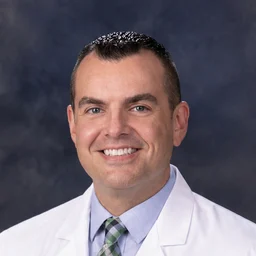
Finasteride / minoxidil foam educational content reviewed by our physician
Scott Nass, MD Doctor of Medicine, board-certified in Family Medicine
Charles R. Drew University and David Geffen School of Medicine at UCLA. Family Medicine residency at Ventura County Medical Center.
Foam
A once-daily topical foam with finasteride and a higher 12% minoxidil for more advanced thinning or when 5% has plateaued. Prescribed by a licensed physician.
Starting at $89/mo
Foam
Finasteride and minoxidil with tretinoin, which helps minoxidil penetrate the scalp, in a one-month foam. Prescribed by a licensed physician.
Starting at $99/mo
Capsule
Oral biotin and minoxidil to support hair growth and scalp circulation. Daily capsules for hair regrowth.
30 capsules per month
Starting at $89/mo
Solution
Advanced 4-ingredient topical for maximum hair regrowth. Combines DHT blocker, vasodilator, prostaglandin, and tretinoin.
Starting at $129/mo
Prescription products require an online evaluation with a licensed medical professional who will determine if a prescription is appropriate. Products are compounded by a licensed pharmacy. The FDA has not reviewed or approved compounded products for any use for safety, efficacy, or quality. Compounded medications are not FDA-approved brand-name products.